
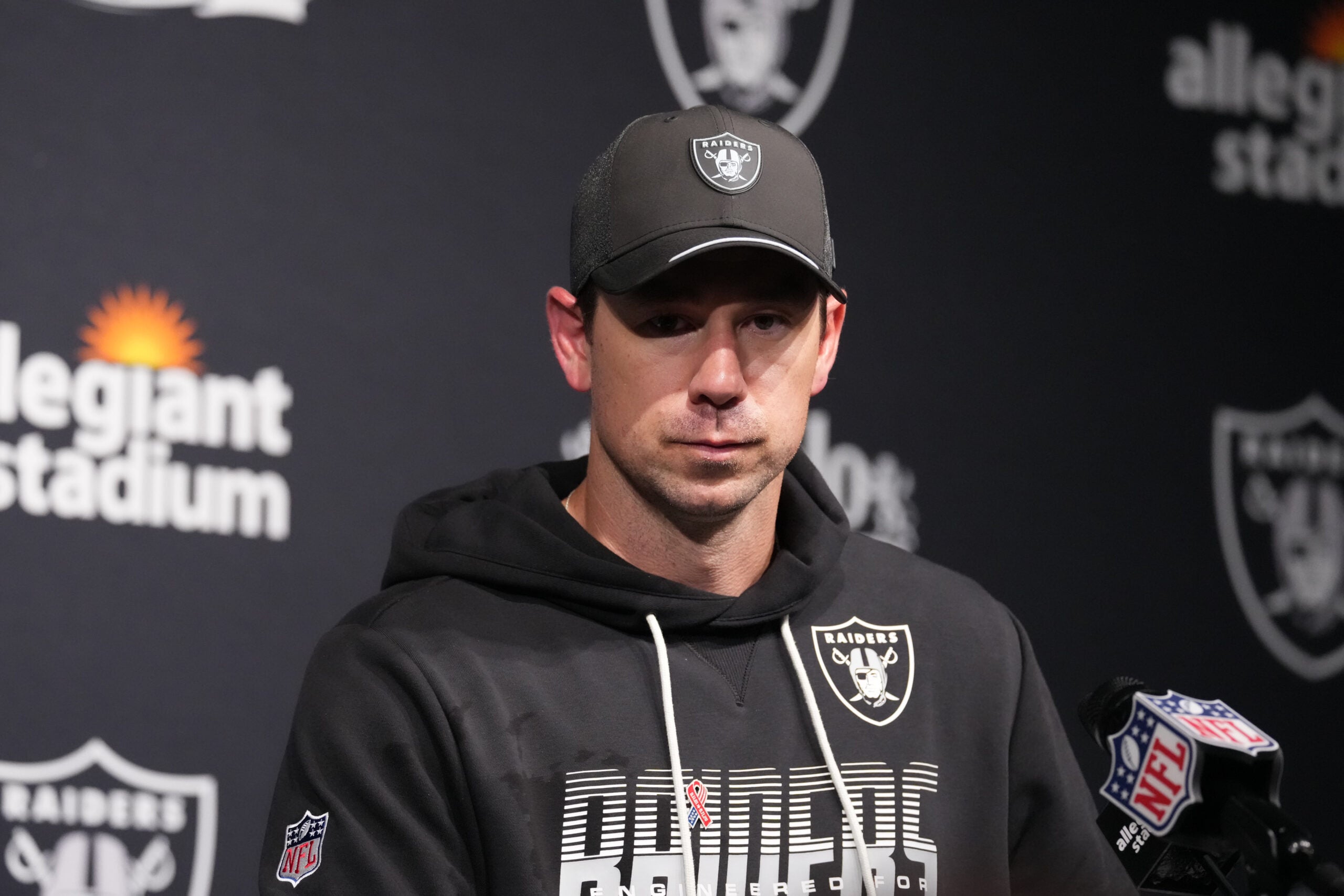
Six games into the 2026 NFL season, the Las Vegas Raiders find themselves at .500. They opened the year with three consecutive victories, giving Raider Nation plenty of reasons to get excited. But three straight losses have since brought everyone back down to earth.
So, which version of the Raiders is the real one?
The answer, as is often the case with a team still under construction, lies somewhere in between.
The Raiders have shown that they can win games, overcome adversity, and compete with some of the AFC's best. At the same time, they've exposed some serious flaws that will keep them from consistently competing with the league's elite. The first three weeks gave us a glimpse of what this team could become. The last three have reminded us of how much work remains.
And honestly? A 3–3 start isn't a bad place to be.
Three Wins That Gave Raider Nation Hope
Let's rewind to September. Coming into the season, I wasn't expecting the Raiders to start 3–0. A new head coach in Klint Kubiak, a new offensive system, new personnel, and plenty of questions surrounding the roster made it difficult to know what to expect.
Yet, somehow, the Raiders found a way to win their first three games.
Week 1: Miami Dolphins — Win, 27–13
The season opener against Miami was arguably the most winnable game on the schedule. The Dolphins were rebuilding, and the Raiders had an opportunity to establish some momentum under their new coaching staff.
They took care of business, winning by two touchdowns. Kirk Cousins threw for two touchdown passes to Ashton Jeanty, who made an immediate impact as both a runner and a receiver. The Raiders also controlled possession for nearly 35 minutes and outgained Miami 290–259.
It wasn't a flawless performance. Miami remained within striking distance for much of the game, and the Raiders still looked like a team learning to execute a new system. But they made enough plays on offense, while the defense came up with timely stops and turnovers to secure the victory.
It was a solid opening statement. Not a championship statement, but a solid one nonetheless.
Week 2: Los Angeles Chargers — Win, 26–14
This was where things started to get interesting.
The Chargers were coming off an 11–6 season in 2025, and nobody should have expected them to stumble to an 0–6 start. Going on the road to face a divisional opponent with a more established roster was a genuine test for the Raiders.
And they passed.
The Raiders earned a 26–14 victory at SoFi Stadium, overcoming a sluggish start to take control of the game. Tre Tucker's 40-yard touchdown reception gave the offense a spark, while the defense forced three turnovers and helped prevent the Chargers from building momentum.
The overall yardage was nearly even, with the Raiders gaining 305 yards to Los Angeles' 310. The difference was that the Raiders made the more important plays when opportunities presented themselves.
That matters. A rebuilding team doesn't need to dominate every statistical category to win. It needs to capitalize on mistakes, protect its leads, and find ways to finish games.
The Raiders did exactly that.
Week 3: New Orleans Saints — Win, 35–27
If the Chargers game demonstrated resilience, the Saints game demonstrated the Raiders' ability to respond when things got uncomfortable.
Playing in the Superdome is never an easy assignment, regardless of the opponent's record. The Raiders found themselves in a back-and-forth contest and needed a strong fourth quarter to leave New Orleans with a victory.
Cousins threw three touchdown passes without an interception, while Brock Bowers hauled in 10 receptions for 116 yards and a touchdown. Rookie running back Mike Washington Jr. also contributed a 36-yard rushing touchdown.
The Raiders finished with 340 total yards, compared with New Orleans' 381. They weren't the more productive team by yardage, but they were the more effective team on the scoreboard.
Most importantly, the defense delivered in the fourth quarter, turning a competitive game into an eight-point victory.
Three games. Three wins. Two road victories. A divisional win against a team many expected to be competitive, followed by another comeback-style performance on the road.
By the end of September, Raider Nation had every reason to feel optimistic. Maybe Kubiak's system was taking hold faster than expected. Maybe Cousins could provide the stability this offense needed. Maybe the defense could build on its opportunistic start.
For the first time in a while, there was something tangible to get excited about.
But then came October.
Three Losses That Brought Us Back to Reality
The Raiders' opening three victories were encouraging, but they also came against teams that presented different challenges from the AFC's established contenders. The next three games would provide a much clearer picture of where this roster stood.
Unfortunately, they also exposed its limitations.
Week 4: Kansas City Chiefs — Loss, 30–27
The Chiefs came into Allegiant Stadium undefeated, and this was the Raiders' first major opportunity to prove that their 3–0 start was more than an early-season hot streak.
For most of the afternoon, the Raiders looked capable of pulling off the upset.
They actually outgained Kansas City 437–399 and controlled possession for nearly 36 minutes. The offense moved the ball effectively, and the Raiders were right there with one of the AFC's perennial contenders.
Then came the fourth quarter.
Kansas City scored 20 points in the final period, including two rushing touchdowns from Kenneth Walker III in a devastating stretch that turned a 19–17 Raiders lead into a 30–19 deficit.
The Raiders responded with a late touchdown to Bowers, but their comeback attempt fell short.
This wasn't a game in which the Raiders were simply outclassed. They generated enough offense to win. The problem was their inability to contain Kansas City's late surge.
That is the difference between a team that can hang around and one that knows how to close out a contender.
Still, losing by three points to an undefeated Chiefs team wasn't a reason to panic. It was a painful result, but also a useful measuring stick.
Week 5: New England Patriots — Loss, 45–17
Then came the ugly one. And once again everybody after this game is saying what we've been enduring for a long time: "Same Old Raiders".
The Raiders traveled to New England to face the reigning AFC champions, and whatever positives they carried out of the Kansas City game quickly evaporated.
The Patriots overwhelmed them, winning 45–17. New England generated 536 total yards of offense, compared with just 306 for Las Vegas. The Raiders also committed eight penalties for 101 yards, repeatedly putting themselves in difficult situations.
This was a comprehensive defeat. The offense struggled to sustain its performance, the defense couldn't consistently slow the Patriots, and the penalty problems only made matters worse.
The East Coast trip may have presented its usual challenges, but the time-zone difference cannot explain away a performance like this. Good teams travel, adjust, and compete. The Raiders failed to do enough of those things in New England.
Of the three losses, this was the one that deserved the most criticism.
It exposed the gap between the Raiders and a team that had re-established itself as an AFC powerhouse. It also showed how quickly things can unravel when the offense cannot sustain drives and the defense spends too much time on the field.
There is no moral victory here and the Raiders were flat out embarrassed this game. It was not a good look for us Bay Area fans who've longed for their return to our TVs in the region since they were blacked out for the past couple weeks as they shared the same time slot with the 49ers.
Week 6: Buffalo Bills — Loss, 33–30
After the New England debacle, the Raiders needed to show some fight. Facing the Buffalo Bills, another of the AFC's premier teams, provided an opportunity to do just that.
And to their credit, they responded.
Buffalo won 33–30, but this was a much more competitive performance. The Raiders gained 378 total yards, outgaining the Bills' 345, and Kirk Cousins threw for 313 yards and two touchdowns. Tre Tucker was a major factor in the passing game, finishing with 97 receiving yards and two touchdown receptions.
The Raiders were within striking distance throughout the afternoon. They even rallied in the fourth quarter, with Tre Tucker catching an 11-yard touchdown and then a spectacular 44-yard score late in the game.
But the same issues that have plagued this team all season resurfaced at the worst possible moments.
The offense struggled to turn enough opportunities into touchdowns, finishing just 2-for-5 in the red zone. Cousins also threw a costly interception, and Buffalo's offense found ways to answer when it needed to a la Josh Allen magic. The Raiders' final touchdown made the score look close, but they couldn't recover the ensuing onside kick to get another opportunity.
Once again, the Raiders were competitive without being able to finish the job.
Still, there's a meaningful distinction between losing 45–17 and losing 33–30. One was a blowout that exposed the team's weaknesses across the board. The other showed that, even against a strong opponent, the Raiders could move the ball and fight until the final moments.
That's not enough to win consistently. But it is something to build on.
The Problems We Can No Longer Ignore
The three-game losing streak has made one thing clear: the Raiders have legitimate issues that need to be addressed before they can compete consistently with the best teams in the league.
1. The running game needs to become more reliable.
Ashton Jeanty remains an important part of the offense, but the ground game has struggled to provide the consistency this team needs. Whether it's his health and workload, the offensive line's run blocking, or the execution of the scheme, the Raiders haven't consistently established a dependable rushing attack.
That puts additional pressure on Cousins and the passing game. When opponents don't have to respect the run, they can focus more attention on the receivers and passing lanes.
Mike Washington Jr.'s contributions against New Orleans and his increased opportunities against Buffalo are encouraging. The coaching staff needs to find ways to get production from the entire backfield rather than asking Jeanty to shoulder too much of the burden.
2. The offensive line must do more in critical situations.
The Raiders have shown they can generate passing yards, but moving the ball between the 20-yard lines is only part of the equation. They need better consistency in the running game and cleaner execution in short-yardage and red-zone situations.
The Buffalo game was a perfect example. The Raiders gained more total yards than the Bills, yet still lost because they couldn't convert enough opportunities into touchdowns.
That is the kind of margin that separates playoff contenders from teams still trying to establish themselves.
3. The defense needs to adjust when opponents adjust.
The defense looked opportunistic during the opening three games, particularly against the Chargers. But the recent stretch has tested defensive coordinator Rob Leonard and his ability to make adjustments against more experienced offenses.
The Kansas City game was especially frustrating. The Raiders held a lead entering the fourth quarter, only to surrender 20 points in the final period.
The Bills game was another reminder that containing elite quarterbacks requires discipline, communication, and execution on every down. The defense has shown flashes, but those flashes need to become sustained performances.
4. The roster still has some glaring weaknesses.
The defensive interior needs more impact, particularly when it comes to disrupting the quarterback and limiting the running game. The secondary is young and still developing, which can leave it vulnerable against experienced quarterbacks and talented receiving groups.
The wide receiver room also needs greater consistency. Tucker's emergence is a positive, but the offense needs dependable production from more than one or two targets.
These aren't problems that can necessarily be solved overnight. Some will require better coaching and development. Others may require personnel changes through the draft, free agency, or trades.
That's the reality of rebuilding a roster. You don't fix everything in one offseason, and the first six games have given the Raiders a much clearer picture of where the work needs to be done.
Three Wins, Three Losses, but Three Wins, One Ugly Loss, Two Moral Victories
So here we are: three wins and three losses.
The official standings don't distinguish between a three-point loss to Kansas City, a three-point loss to Buffalo, and a 28-point loss to New England. They're all losses, and the Raiders have to own that.
But context matters.
The Raiders started 3–0, exceeding expectations and showing that Kubiak's team could win games even when things didn't go perfectly. They then faced three difficult opponents and discovered just how steep the climb remains.
New England handed them an undeniable reality check. There is no sugarcoating that performance.
Kansas City and Buffalo, however, offered something different. The Raiders were competitive against both teams and had opportunities to make those games even more interesting. They showed that they can move the ball against quality defenses, respond to adversity, and remain in contention late into games.
The frustrating part is that they haven't consistently made the plays necessary to turn those performances into wins.
That's where the Raiders need to grow.
Moral victories don't count in the standings, and Raider Nation shouldn't settle for them forever. But for a team still establishing its identity, these performances can offer valuable lessons. They reveal what works, what breaks down under pressure, and what must improve before this team can take the next step.
The goal isn't to celebrate a 3–3 record as if the Raiders have already arrived. It's to recognize that the first three games showed promise, while the next three exposed the work still ahead.
Both things can be true.
Raider Nation, Don't Hit the Panic Button Just Yet
I understand why some of us are frustrated. Starting 3–0 raises expectations, and losing three straight is never easy to stomach. It's especially frustrating when two of those losses are close enough to make you wonder what might have been. We've seen this cycle so many times across this team's myriad of failed regimes where this team we believe is on the come up. But there's those games that they should have won, taken care of business, and they failed.
But we also need to remember where this team is in its development.
John Spytek and Klint Kubiak are building something that will take time. The roster has talent, but it isn't a finished product. The coaching staff is still learning what works best with its personnel, and the players are still learning how to execute within a new system.
One offseason wasn't going to fix every weakness. Six games certainly won't.
The next step is turning these lessons into progress. The Raiders need to clean up the penalties, improve the offensive line's consistency, get more out of the running game, and learn how to finish against strong opponents. The defense must find answers when opposing offenses begin to exploit its weaknesses.
And the team needs to do all of that while continuing to develop its younger players.
That's a tall order, but it's also what a rebuild looks like.
The 3–0 start was exciting, and perhaps some of us rode that high a little too much. The three-game losing streak has brought us back to reality. The Raiders are not yet on the same level as the AFC's elite, and the gap is more evident now than it was a month ago.
But the season isn't over. The promise hasn't disappeared. And a 3–3 record, with plenty of football still to play, is hardly a reason to give up on the direction of the franchise. The only thing we can take solace in is in 5 of these 6 games, the Raiders have shown that they're not going to lay down easily like in years' past.
We wanted to see signs of progress. We got them in September. Now we need to see whether the organization can respond to adversity and build on what it has learned in October.
The Raiders have shown us what they can be. Now it's time for them to prove they can become that team consistently.
Give Spytek and Kubiak time. Keep the expectations realistic, keep holding the team accountable, and let the process play out.
This is a work in progress, Raider Nation.
And this is only the beginning.


